Were There Welsh Explorers on the Shores of Mobile Bay 300 Years Before Columbus “Discovered” America?

By William Bruce

Prince Madoc in Mobile, AL

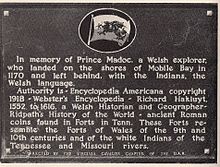
Legend says Welsh explorers were on the shores of Mobile Bay in the year 1170.

We find this legend an intriguing bit of local lore — and thought you might, too.

Ancient texts tell of Prince Madoc, an illegitimate but much-beloved son of a 12th Century ruler of Wales. According to legend, Madoc lost a quarrel with his brothers over his inheritance upon the death of his father.

Again according to legend, Madoc having nothing to lose gathered a group of fellow adventurers and set sail west from Wales on a venture of discovery.  With favorable winds and currents – and a lot of luck – Madoc’s group landed on the shores of Mobile Bay in the year 1170.

Leaving most of his party in the new world, Madoc returned to Wales to recruit more colonists for another trip.  With amazing stories of this newly discovered land, Madoc had no trouble gathering a large group and outfitting three ships for the return voyage.  After sailing from Wales, the group was never heard from again, presumably lost at sea.

Prince Madoc, Mobile

Until Hurricane Frederic, this sign stood on the Ft. Morgan Highway.

Meanwhile, the survivors that Madoc left in the Mobile area gradually migrated – or were driven by hostile Indians – up the major river systems of the country.  Some historians maintain that the colonists evolved over the next several hundred years into the Mandan Indian Tribe of Missouri, an atypical tribe of “Indians” who used vestiges of the Welsh language and with some members of the tribe having light skin, red hair and blue eyes.

George Catlin, the Pennsylvania lawyer turned Indian painter who lived among the Mandans in the early 1800s, came to believe that they were descendants of Madoc’s group.

Other tantalizing clues in America lending credence to this legend are early Welsh artifacts found in the Southeast, a series of ancient fortifications of unknown origin but of peculiar Welsh design along the group’s supposed path of migration northward, and the accounts of early explorers of the American interior encountering “White Indians” speaking remnants of the Welsh language.

Proponents of the Madoc legend frequently quote John Sevier, the first governor of Tennessee.  In 1782, Sevier visited the ruling Chief of the Cherokee Nation, Oconostota.  Sevier asked Chief Oconostota about the curious ancient fortifications near Chattanooga along the supposed inland migration route of Madoc’s survivors.

The old chief told Sevier that the works had been made by the first white people who came to their lands from the Gulf of Mexico, into what is now Mobile Bay, and then up the rivers.  According to Sevier’s writings, Chief Oconostota stated that “he had heard his grandfather and father say they were a people called Welsh, and they had crossed the Great Water in ships.”

Sevier also wrote in 1799 of the alleged discovery of six skeletons in brass armour bearing the Welsh coat-of-arms.

President Thomas Jefferson had heard enough about the “White Indians” to ask Lewis and Clark to keep an eye out for them.

None were encountered.  But the legend lives on.

x     x     x

William “Will” Bruce is a resident of Fairhope, Alabama.  Professionally, he is a mergers and acquisitions advisor, an Accredited Business Intermediary (ABI), and a Senior Valuation Analyst (SVA) assisting business buyers and sellers with the transfer of ownership.  But this website is mostly about non-business local issues, events, and “stuff.”  William may be reached by email at Will@WilliamBruce.org.

To subscribe to these ramblings, please see the subscription feature in the upper right part of this page.

Posted in Alabama, Mobile Alabama, Uncategorized | Tagged , , , , , , , , , , , , , | 3 Comments

The Colorful History of Pirates Cove Bar and Restaurant

In the annals of iconic bars in South Baldwin County, Pirates Cove ranks right up there with the Flora-Bama.  But while the Flora-Bama is on the main beach highway, Pirates Cove is, well, … not.

It’s in the boonies down County Road 95 below Elberta near the community of Josephine.  Its waterfront location is on Arnica Bay.  And where is Arnica Bay, you ask?   It’s a recessed body just west of Perdido Bay.  Today, it forms a natural section of the Intracoastal Waterway.

For residents of Gulf Shores and Orange Beach, getting to Pirate’s Cove by boat is dramatically shorter than driving.

As a pleasant surprise, I found just this morning an article by Breck Pappas in Mobile Bay magazine.  Pappas does a great job of storytelling by interviewing and quoting the owners, employees and quirky customers of the bar.  For the colorful story, be sure to read the entire article by following the link below.

Some nuggets:

  • Before the Civil War, Mobile’s Rafael Semmes was a pirate, according to the storyteller’s history, and used to hide out in a bayou behind the current location of Pirates Cove.
  • The original Pirates Cove building was constructed in the 1930s as a bunkhouse for the Civilian Conversation Corps workers who were digging the Intracoastal Waterway.
  • There were always dogs in residence at Pirate’s Cove, with one named Riff Raff as a humorous nod toward the generally agreed-upon characterization of the bar’s customer base.
  • Because dogs were always there, many customers brought their own dogs and ordered an extra cheeseburger for the pooch.  But the residential dogs always looked askance at those on leashes, considering them, it’s assumed, second class citizens.

To read the very entertaining full article, please click here.

X     X     X

William “Will” Bruce is a resident of Fairhope, Alabama.  Professionally, he is a mergers and acquisitions advisor, an Accredited Business Intermediary (ABI), and a Senior Valuation Analyst (SVA) assisting business buyers and sellers with the transfer of ownership.  But this website is mostly about non-business local issues, events, and “stuff.”  He may be reached by email at Will@WilliamBruce.org.

Posted in Alabama, Fairhope Alabama | Tagged , , , , | Leave a comment

Tim Cook, CEO of Apple, is from Robertsdale.

This is an interesting article about Robertsdale’s own, Tim Cook, who is CEO of Apple.  The author describes Cook’s communications and management skills.

To read the article, please click here.

Posted in Uncategorized | Leave a comment

Giving a Shoutout to Fairhope’s Invaluable Healthcare Workers During this Covid Mess!

William Bruce Salutes Healthcare Workers

Posted in Uncategorized | Leave a comment

Talking to the Dead: Séances in Safford

By William Bruce

Webster defines a séance as a meetingSeance in which people attempt to make contact with the dead.  The movement was labeled Spiritualism and reached a peak in the United States in the first half of the 20th Century.

And Safford, Alabama, just 10 miles up the road from my hometown, had a practitioner of spiritualism.

An article in Wikipedia says that Spiritualism was “a religious movement based on the belief that the spirits of the dead exist and have both the ability and the inclination to communicate with the living.”

Well … uh … a’hem.

Enter Ms. Stroud.  Today, no one seems to remember her given name or much else about this mysterious individual.   For many years and into the 1950s, she owned The Spot Restaurant in Safford.  What is remembered is that she was rather nicely dressed and coiffed, was well-spoken and wore attractive jewelry.  Some also remember that she raised parakeets and had monkeys in cages out behind the restaurant.

Others wonder if she was related to the erudite Oxford Stroud, a legendary and well known literature professor at the University of Alabama.

But what is not well known is that Ms. Stroud was a spiritualist.  She held séances after hours in The Spot Restaurant.  The knowledge of these séances exists only among a few today who heard an older generation talking about their experiences.

My father, Henderson Bruce of Catherine, was a congenial sort of guy who apparently became friendly enough with Ms. Stroud to be invited to her séances.  I’m thinking this would have been in the 1940s or early 1950s.

I remember Daddy speaking several times humorously of the séance experiences.  He says the participants would sit around a table in a darkened room.  The table at some point would start vibrating and Ms. Stroud would go into a trance with her hands palms down on the table and in a strained voice say, “Edward [or whomever they were trying to reach] is that you trying to come through.”

Whether the table was vibrating from spirit machinations or manual manipulations by living humans is unanswered.

My father’s memories were later confirmed by Randolph Oxford of Orrville who laughingly told me years after my father’s death about the experiences.  He said that he and Daddy attended some of the séances together.  Daddy indicated that he and possibly others would knock back several shots of Early Times before the gatherings.  The Early Times bit is wholly believable.

But apparently, attendance at the séances had more of a negative effect on others.  Anne Orr, who grew up in the Orrville area, says her parents accepted an invitation from Ms. Stroud and attended only to “humor an older lady.”

However, Anne says her parents’ experience was not benign.  She says her father could never reconcile what happened that night with his religious beliefs and that afterward he slept with a shotgun by his bed.

The Spiritualism movement waned in the latter half of the 20th Century.  And alas, The Spot Restaurant is no more.

Perhaps the Spiritualism movement declined as the deceased got tired of blabbing with the earthbound.  Maybe they have set up a distilling operation in their current environs and are producing enough Early Times to entertain themselves without any idle chit-chat with the living.

Posted in Uncategorized | 2 Comments

The Business of Beer

“Without question, the greatest invention in the history of mankind is beer.  Oh, I grant you that the wheel was also a fine invention, but the wheel does not go nearly as well with pizza.”                       -Dave Barry

Beer is a huge worldwide business.  With Oktoberfest recently celebrated, an event involving copious quantities of beer, I thought it might be an appropriate time to take a look at the business side of the brew.

Beer is the world’s most widely consumed and probably oldest alcoholic beverage; it is the third most popular drink overall, after water and tea.

Interestingly, the Czech Republic is the world’s largest per capita consumer of beer.  Folks there each consume 42 gallons per year of the brew.   In second place – no surprise – is Ireland where those jolly folks annually drink 32 gallons per person. Rounding out the top five counties in consumption are Austria, Germany and Romania.

The United States actually ranks 15th in the world in per capita consumption.  We each quaff an average of 21 gallons of beer per year which is slightly more than the average American person drinks in milk.

Within the U.S. it’s surprising that the top three states in per person consumption of beer are New Hampshire, Montana and North Dakota. What gives with that?  It’s cold as the dickens in those states.  You would think that the hottest states would be the top consumers.  My personal consumption skyrockets in August to help me survive the dreaded month in Alabama.

As you might imagine, the citizens of the Mormon dominated state of Utah consume the least amount of beer.  I’ll give you 10 to 1 odds that Mitt Romney never, ever in his whole life enjoyed a brew (although there is no doubt that it would help him assuage his recent defeat).

The largest beer company in the U.S. by far is Anheuser-Bush, brewers of Budweiser,  which has captured 48 percent of the market.  MillerCoors is in second place with 29 percent of the American market.  The remainder of the market is scattered among smaller brewers with Pabst at three percent of the market and my favorite, Yuengling, garnering one percent market share.

Anheuser-Busch Companies, Inc. was an American brewing company which operated 12 breweries in the United States and 18 in other countries.  In 2008, Anheuser-Busch was acquired by InBev, a large Belgian and Brazilian brewer for $52 billion. The acquisition created the world’s largest brewer, uniting the maker of Budweiser and Michelob with the producer of Beck’s, Stella Artois, Hoegaarden, Leffe, Bass, Labatt and Brahma. The combined companies have yearly sales of more than $36.4 billion.

Not everyone was pleased with the sale of Anheuser-Bush to InBev.  Shortly after the sale, one industry watcher said, “Within six months, InBev turned a family-led company that spared little expense into one that is focused intently on cost-cutting and profit margins, while rethinking the way it sells beer.”

Anyway, if I run into you in the neighborhood beer joint, maybe you could buy me a beer during my next elbow aerobics class!

#     #     #

William Bruce is a business broker, Accredited Business Intermediary, business appraiser and beer drinker.  He may be reached at WilliamBruceOnline@gmail.com or (251) 626-4949.  His business brokerage website may be viewed at www.WilliamBruce.net.

Posted in Alabama, William Bruce | Tagged , , , , , , , , , , , , | Leave a comment

What’s With Camden, Alabama? Is There Something in the Water?

Wilcox County Courthouse, Camden, Alabama

As of this month, little Camden, Alabama now claims an incumbent United States Senator, an incumbent member of the U.S. House of Representatives, the incumbent Lieutenant Governor of the State of Alabama, and now the President of the University of Alabama.

Camden is the county seat of rural Wilcox County.  The town’s population consists of  about 2,000 folks.  How has this tiny hamlet produced such a stable of leaders?

As an example of how extraordinary this is, let’s extrapolate.  Mobile, Alabama’s population is 195,000.  If Mobile had produced leaders at the same rate as Camden, the city should have 388 individuals currently serving as college presidents, in state constitutional offices and in the United State Senate and House of Representatives.

But hey, I can count only four in Mobile.  And two of them are originally from Camden!

So what’s the difference?

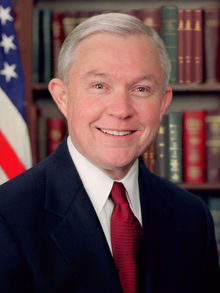
United States Senator Jeff Sessions

The best known of these Camden, Alabama leaders may be Jeff Sessions.   From 1981 to 1993 he served as U.S. Attorney for the Southern District of Alabama.  Older Alabamians may remember that President Ronald Reagan nominated him to a federal judgeship in 1986, but that appointment was blocked by Sen. Ted Kennedy and his colleagues.  Sessions was elected Attorney General of Alabamain 1994. He was elected to the U.S. Senate in 1996 and easily re-elected in 2002 and 2008.  He is a leader among conservatives in Washington and a strong voice for those principles  in the Senate.

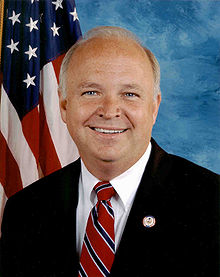
Jo Bonner, Member of Congress

Also serving in Washington is Camden native Jo Bonner.  In 2002, Bonner  ran for the House seat vacated by retiring Republican U.S. Representative Sonny Callahan, whom Bonner had served as Chief of Staff.  He has been re-elected every two years since.  With Republican control of the House of Representatives and with his seniority and winning personality, Bonner has become an influential member of Congress.

Alabama Lt. Governor Kay Ivey

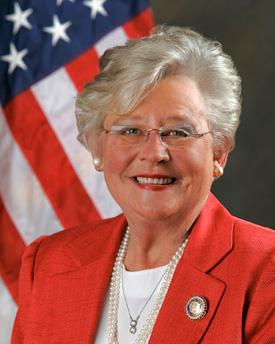
The Lieutenant Governor of Alabama, Kay Ivey, is also a Camden native.  In her second run for statewide office, Republican Ivey was elected State Treasurer in 2002 by beating Stephen Black, the grandson of former United States Supreme Court Justice Hugo Black.  She was re-elected four years later.  In 2010, Ivey defeated Democratic incumbent Lieutenant Governor Jim Folsom, Jr., who was seeking an unprecedented fourth term.

Judy Bonner, President, University of Alabama

And just in the last few days, Camden native Judy Bonner was named President of the University of Alabama by the Board of Trustees of that 30,000 student institution.  Bonner served as interim president from March to July this year after UA’s former president, Robert Witt, was appointed chancellor of the University of Alabama system.  She has held faculty positions at UA, the University of Alabama at Birmingham and Ohio State University.  And yes, she’s the older sister of Congressman Jo Bonner, above.

So what is it about Camden that produces these leaders in such disproportionate numbers?  I don’t know for sure.  What I do know is that these four individuals had really good parents who were involved their community, who placed a strong emphasis on education and who went the extra mile in raising their kids.  A lot of people in Camden are like that.

And now for the author’s disclaimer: I’m bragging.

You see, I’m also from Wilcox County.  I grew up with these folks.  I went to school with them.  They’re all “good people.”  I’m proud of them!

#     #     #

Other posts by Will Bruce:

Did Jesse James Practice Medicine in Baldwin County, Alabama?

Were There Welsh Explorers on the Shores of Mobile Bay 300 Years Before Columbus “Discovered” America?

An Adventure into Prehistoric Alabama.

90-Year Old Coppersmith Still Turning Out Lanterns.

Let’s Pass a Law Against August!

The William Bruce Business Discussion (a tad more serious)

Posted in Alabama, Mobile Alabama, Uncategorized | Tagged , , , , , , , , | 13 Comments

On the “Hot Tamale Trail” Through the Mississippi Delta

Where is the Mississippi Delta, you ask?

“Da’hling, it begins in the lobby of the Peabody Hotel in Memphis,” explains a dowager of the Delta, “and ends on Catfish Row in Vicksburg, Mississippi.”

The Mississippi Delta is the distinctive northwest section of the state that lies along the  Mississippi River. The region has been called the most southern place on earth because of its unique racial, cultural, and economic history.

Technically the area is not a delta but part of an alluvial plain, created
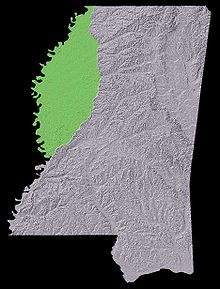
The Mississippi Delta

by regular flooding of the Mississippi River over thousands of years. This region is remarkably flat and contains some of the most fertile soil in the world.  It is one of the most productive cotton-growing areas in America.  Catfish have become another important crop in recent decades.

And what is the “Hot Tamale Trail,” you also ask?

The Southern Foodways Alliance and Viking Range Corporation in cooperation with the state’s tourism department created the Mississippi Delta Hot Tamale Trail in an effort to document the history, tradition, and culture of hot tamales in the Delta.

Many say that tamales made their way to the Mississippi Delta in the early twentieth century when migrant laborers were brought in from Mexico to work the cotton harvest. The African Americans who shared the fields easily recognized the basic tamale ingredients (corn meal and pork) and adopted the tamale as their own.

Others maintain that the Delta’s history with tamales goes back to the U.S.-Mexican War one hundred years earlier, when U.S. soldiers from Mississippi traveled to Mexico and brought tamale recipes home with them.

In any event, hot tamale stands and restaurants serving them are frequently encountered throughout the Delta.

My interest in the Hot Tamale Trail started with a restaurant in Fairhope, Alabama which imports hot tamales from the Delta.  Googling “Mississippi Delta Hot Tamales,” I found the trail – and voila – a road trip was born.

Good friends Linda and Fulton Thompson of Jackson, Mississippi

Linda and Fulton Thompson at first stop in Indianola, MS.

immediately bought into the idea, organized the trip and served as tour guides.  Linda and Fulton are as good friends as anyone could hope to have and their families go back many generations in the state’s history.

With perfect October weather on a recent Saturday, we headed out from their home in Jackson for the Delta.  Passing through Yazoo City, the land flattened out and cotton fields stretched seemingly forever.  “We’re in the Delta now,” Linda explained. She’s a native of Yazoo City.

Our first stop was the B.B. King Museum and Delta Interpretative Center in Indianola.  In addition to cotton, tamales and catfish, the Mississippi Delta is known as the birthplace of the Blues, a musical form that originated in African-American communities of the Delta around the end of the 19th century from spirituals, work songs and rhymed narrative ballads.

B.B. King, an Indianola native, is considered one of the most influential blues musicians of all time.  He is often called ‘The King of Blues’.  His museum is very well done and thoroughly enjoyable.  Certainly recommended if you’re anywhere in the area.

After a wonderful lunch and delightful visit with the most hospitable owners at the Crown Restaurant in downtown Indianola, it was off to

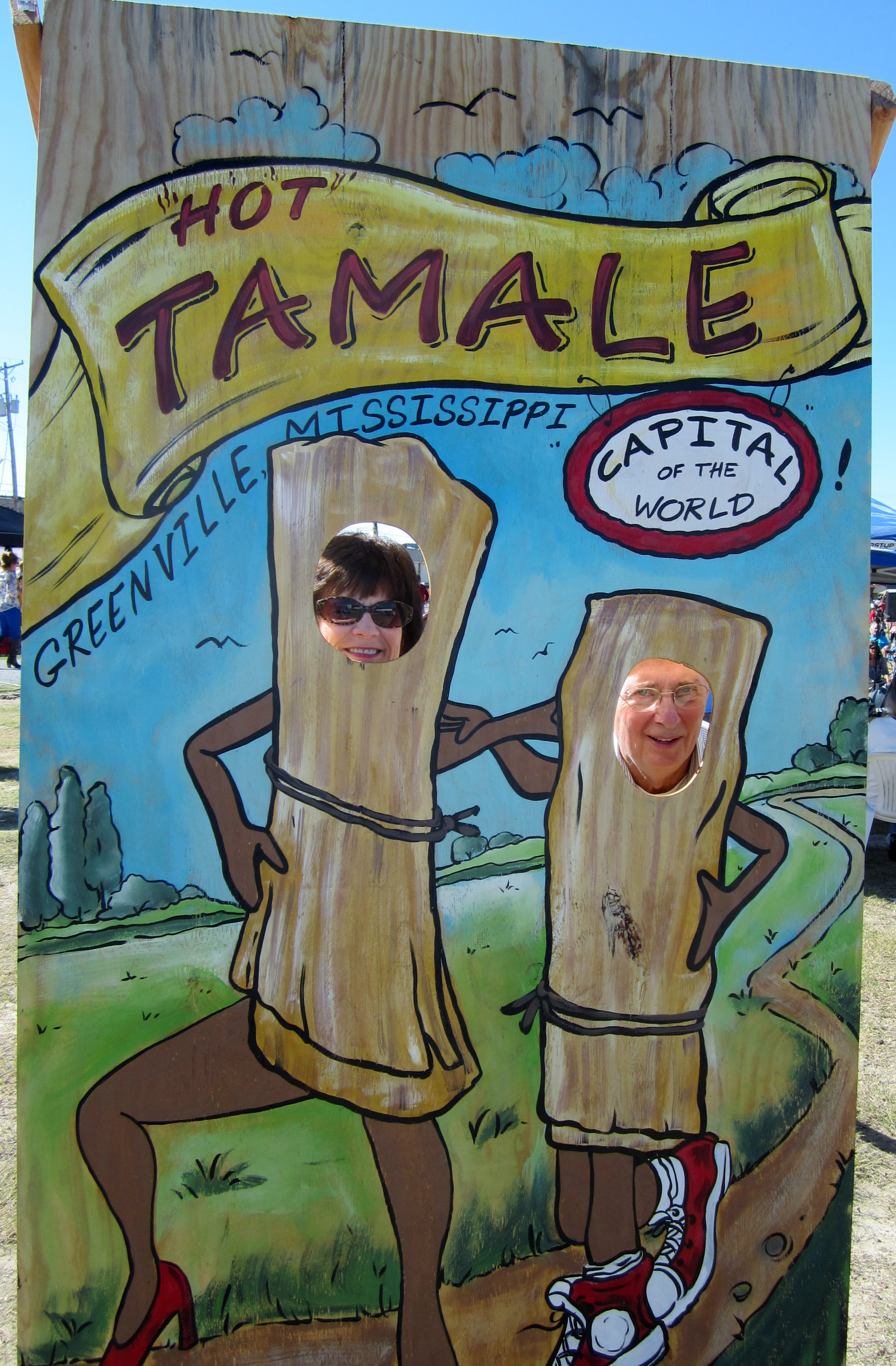
A “Wild and Crazy” couple at the First Annual Hot Tamale Festival in Greenville, MS.

Greenville and the “First Annual Hot Tamale Festival.”  Greenville’s mayor recently decreed it the “Hot Tamale Capital of the World” and organized the first festival.

Previously known as the “Queen City of the Delta,” Greenville has fallen on hard times in recent years with the exit of several large employers. But our time there was fun.  And the festival was populated with of lots of friendly Greenvillians, hot tamale booths and craft vendors.

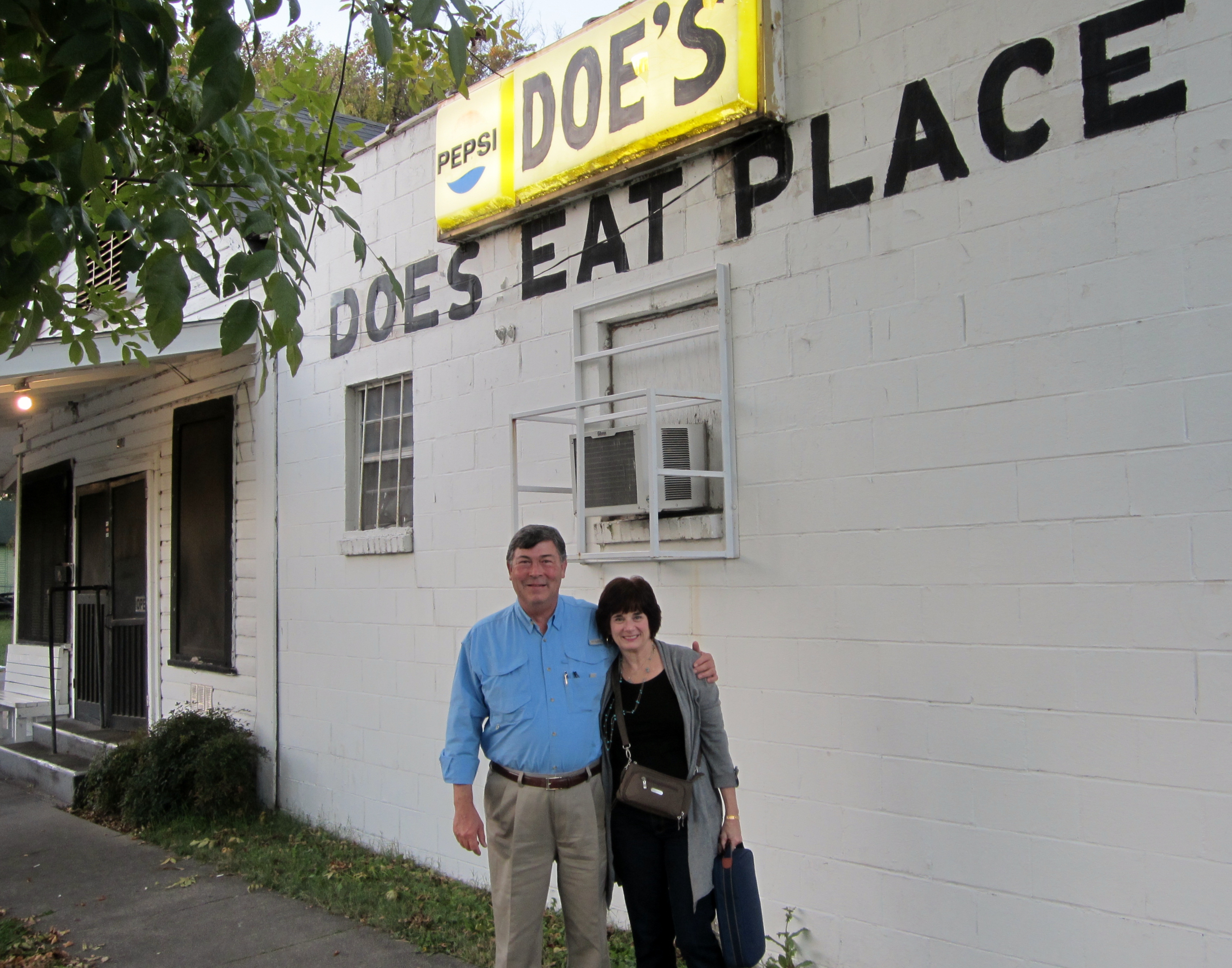
The night meal in Greenville was at Doe’s Eat Place, known throughout the region for its tamales, steaks and spaghetti. I had heard it was “downscale.”

Will Bruce and Linda Thompson at Doe’s Eat Place

That was an understatement.  But in a good way.  A good way in which some “dives” have the best food in town.  You walk through two kitchens to get to the dining room.  The kitchens could not be described as “sparkling.”  But you get the feeling that the friendly wait staff has been there since they dug the Mississippi River.  The restaurant, in fact, has been there just about that long.  The business, in one form or another, has been in Doe Signa’s family for well over a hundred years.

The kitchen at Doe’s Eat Place

The building that now houses the restaurant was first used by Doe’s father as a grocery store, starting in 1903.  After the flood of 1927 which devastated the area, the Signas went into bootlegging to get back on their feet.  After several years, Mr. Signa sold his 40 barrel still for $300.00 and a Model T Ford.  Around 1941 Mrs. Signa received a recipe for hot tamales. She tickered with the recipe and then began selling them. Thus began Doe’s Eat Place in its current incarnation.

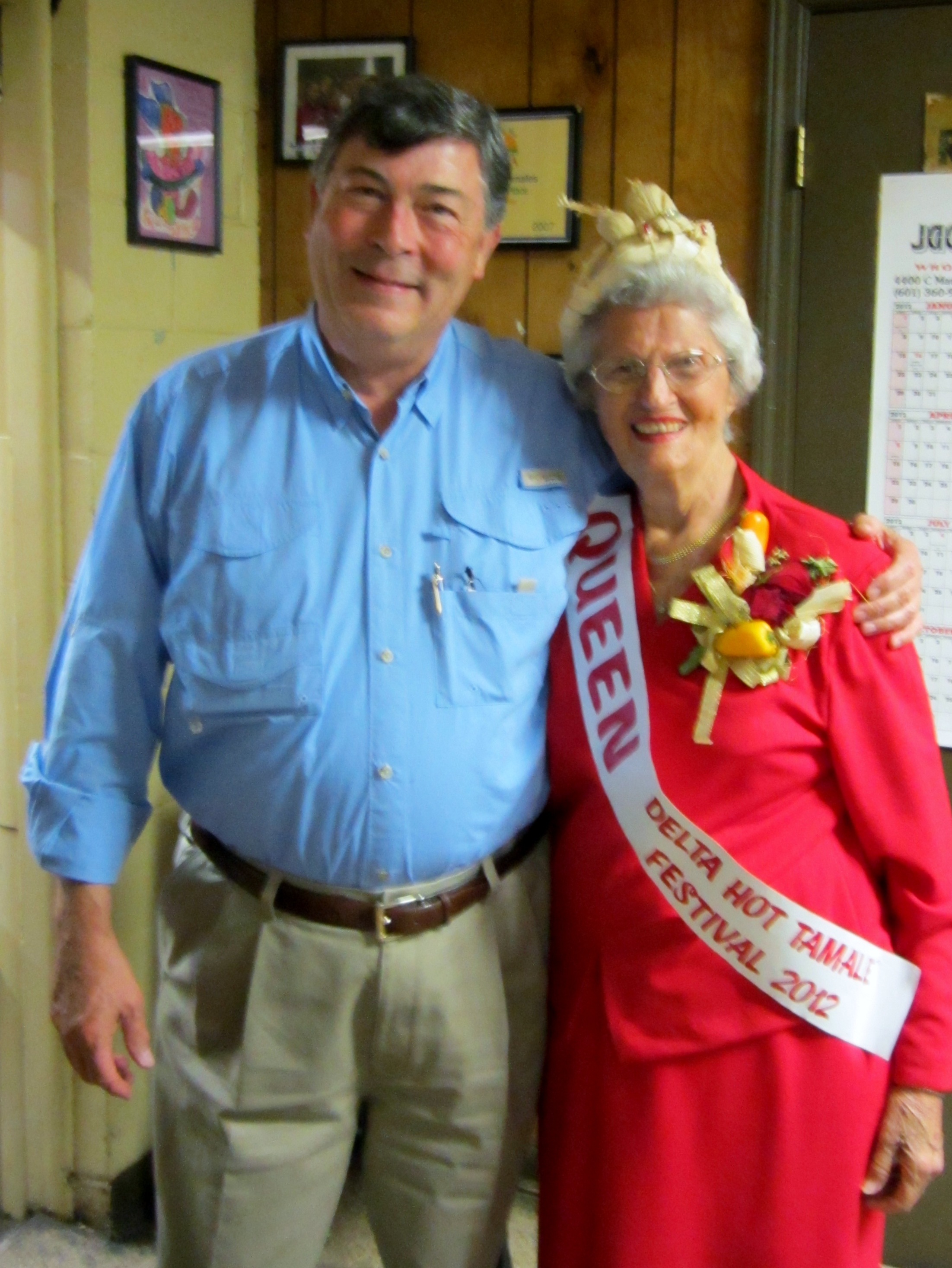
And I’m here to tell you, it’s not to be missed.  The tamales are perfectly seasoned and the steaks with fries are to kill for.  Mid meal, someone from the kitchen shouted “The Hot Tamale Queen is here!” It was a visit by royalty!

The Hot Tamale Queen her-own-self, crowned just that morning at the festival, dropped by the restaurant.  At age 86, the first ever  “Hot Tamale Queen” is area native Florence Signa.

Actually as it turns out, and very appropriately, the Queen is part of

Will Bruce with “The Hot Tamale Queen,” Florence Signa. Notice the Queen’s crown of hot tamale corn husks.

the Doe’s restaurant family.  She is the widow of Doe Signa’s brother.  When not attending to the responsibilities of royalty, she is in the restaurant tossing salads and greeting the generations of customers who come for a steak and a hug.  Friendly and gracious, the Queen is also patient, as in “Can I have my picture made with you?”

The next morning it was off to Greenwood, Mississippi.  If Greenville is the “Queen City of the Delta,” then Greenwood could be labeled the “Renaissance City of the Delta.”  It’s a charming place.

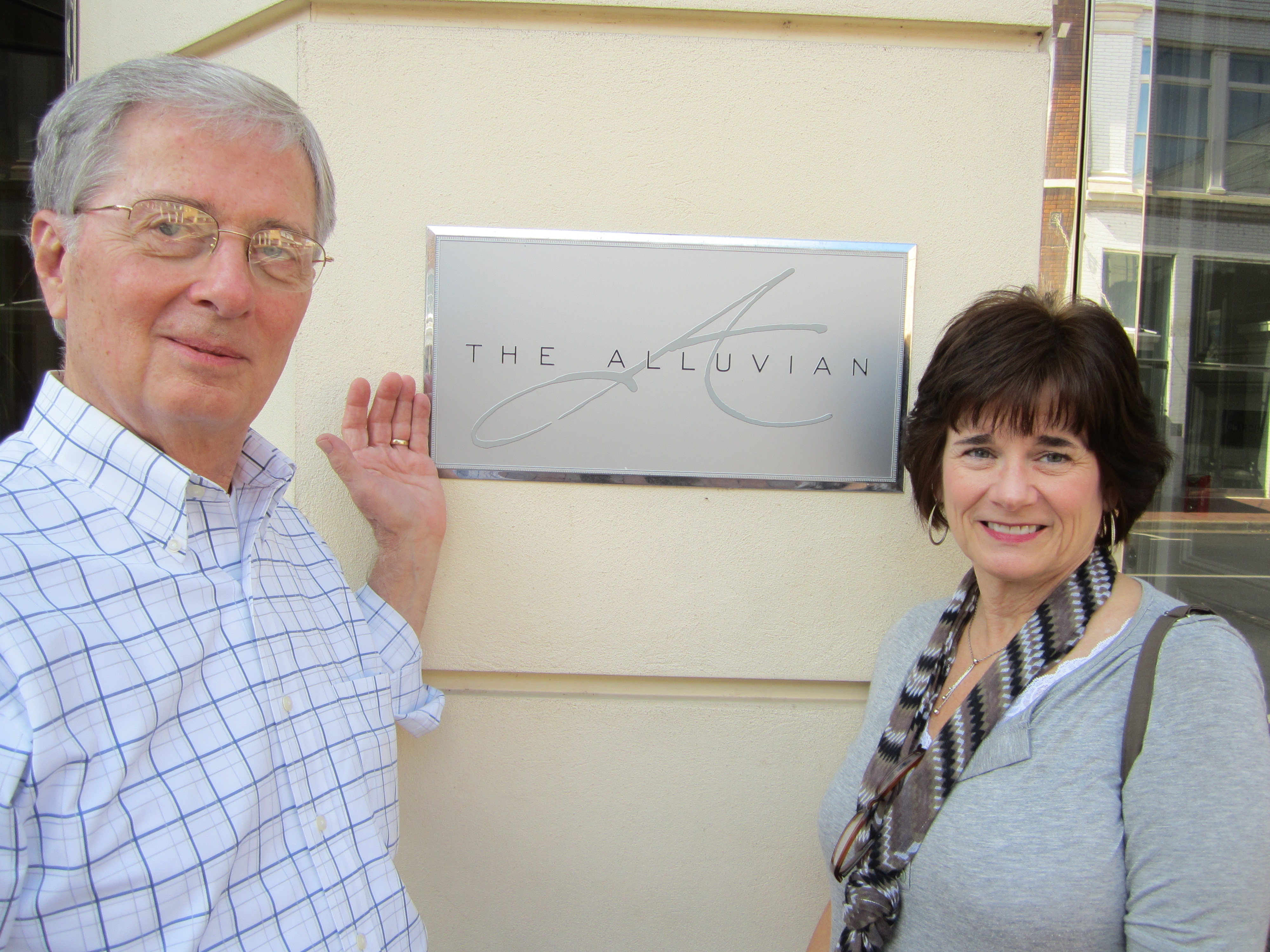
At $400 a night, the Alluvian was a bit pricey for our group. The picture was free.

Much of Greenwood’s charm can be attributed to successful businessman and Greenville native, Fred Carl, Jr.   In the 1980s, Carl founded the Viking Range Corporation to manufacture commercial grade kitchen stoves for the residential market.  The local venture found a worlwide market and has been wildly successful.  Fred Carl, with a generous sense of loyalty to his hometown, has used some of the profits to refurbish the city.  The gem of downtown Greenwood now is the Alluvian Hotel, splendidly restored by Carl, and located right across the street from the Viking Cooking School.

Sunday lunch was at the delightful and upscale Crystal Grill, which judging by the crowd’s appearance, certainly must be one of the “in places” in Greenwood.   Tour Director Linda Thompson again displayed her knack for picking the right restaurants.

Concluding our Delta adventure, we pointed the Buick with the rag-tag group strapped in  towards Linda’s hometown, Yazoo City, our last stop.  It was interesting to see that the Mississippi Chemical Company is still in business in Yazoo City after all these years, although under new ownership and a different name.  Linda says she remembers well the country humorist Jerry Clower who took much of his material from incidents around Yazoo City and Mississippi Chemical Company.  She says that in person he was just like he was on stage – loud and funny.

Our time in Yazoo City was capped off by a visit to “The Witch’s

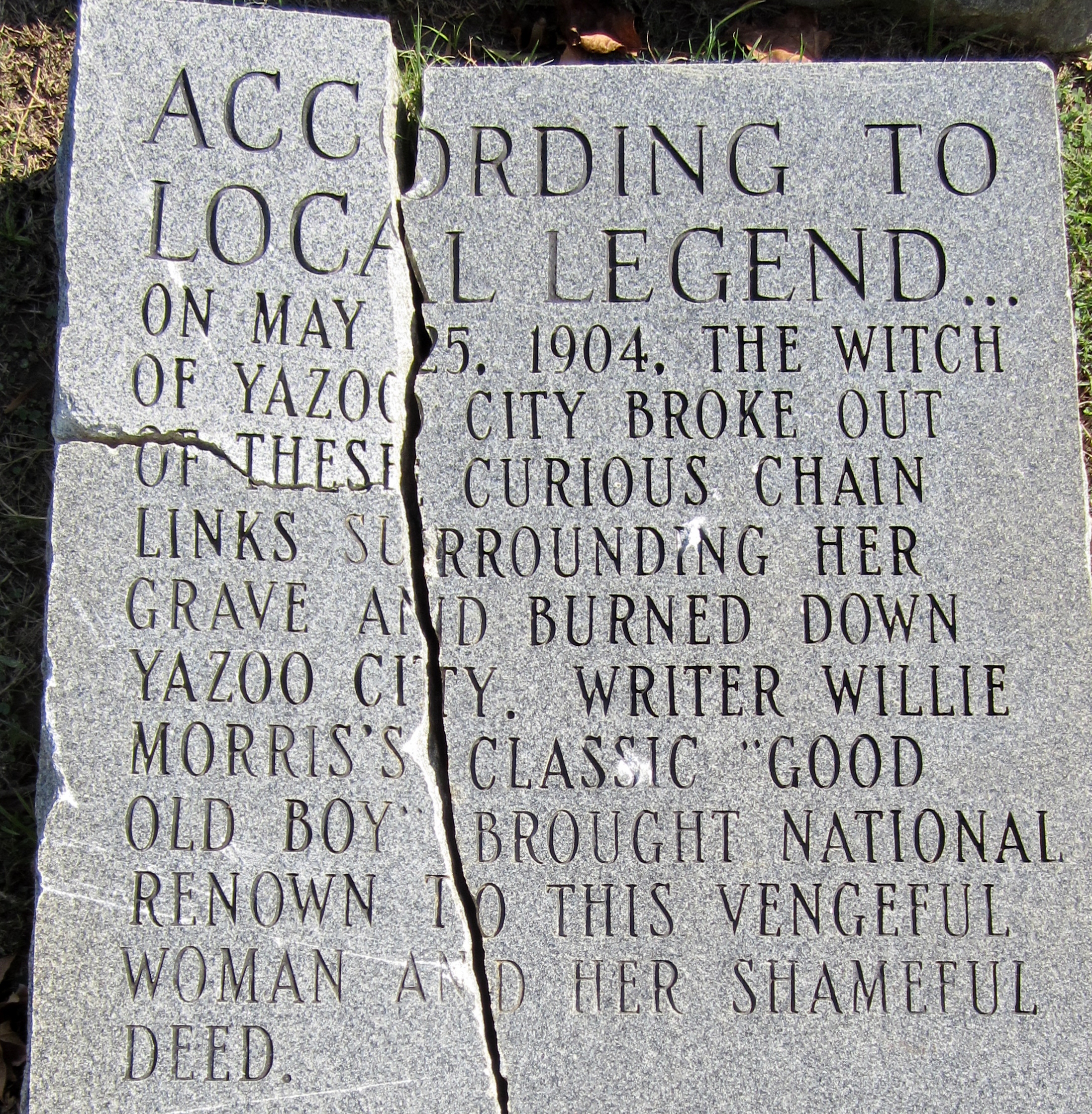
The Witch’s grave in Yazoo City. According to noted Mississippi author, Willie Morris, she burned down the town in 1904.

Grave” in the local cemetery.  According to noted author and Yazoo City native, Willie Morris, who wrote of the incident, the witch broke out of the local jail in 1904 and vengefully burned down the town.  Willie Morris’ grave, incidentally, is only two markers away from the witch’s.

The Mississippi Delta, Willie Morris, The Witch, Greenwood, Indianola’s B.B. King, Greenville, The Hot Tamale Queen and Doe’s Eat Place.

It was an excellent adventure!

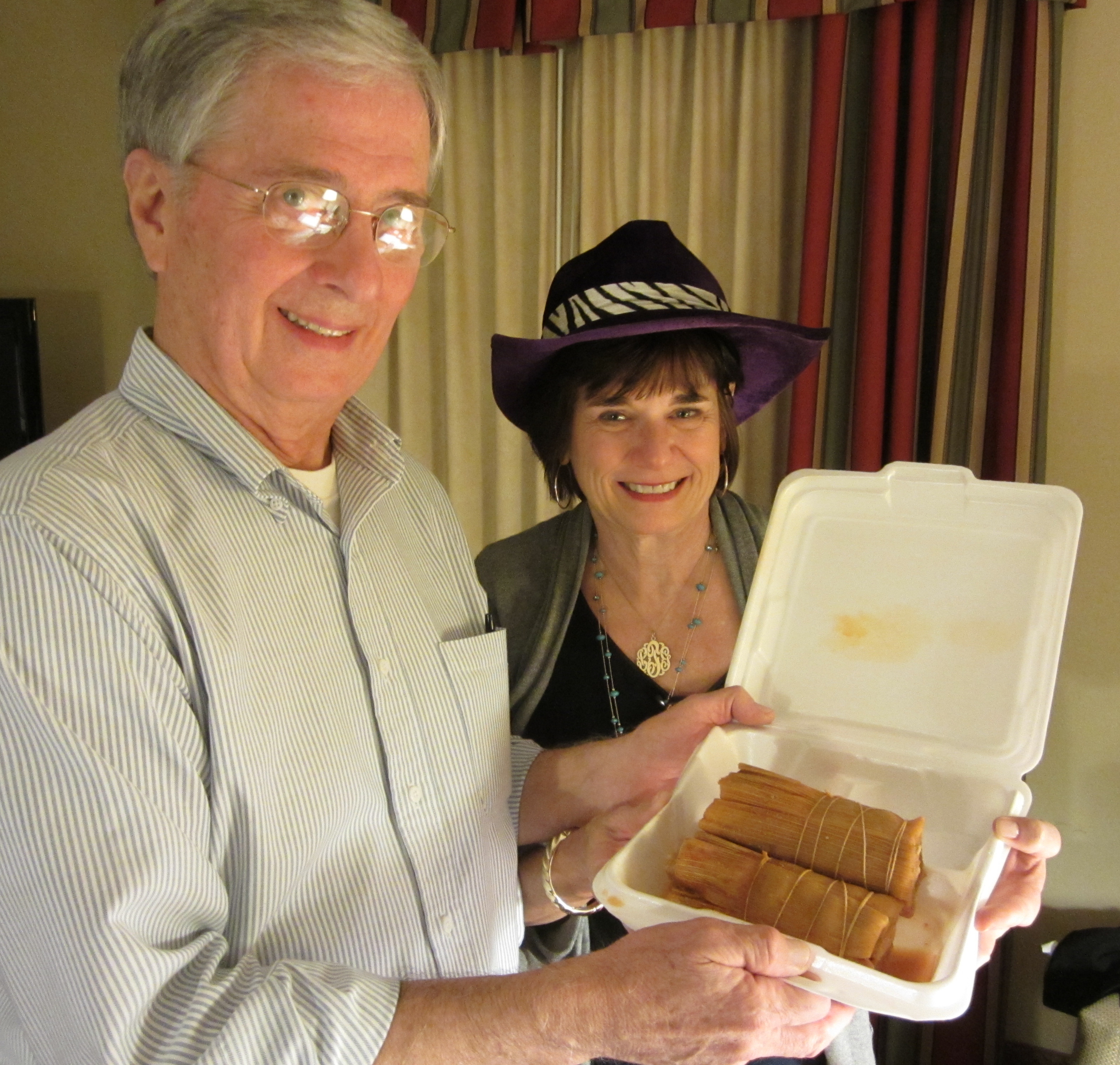
Taking some Delta tamales home to friends. Notice Linda’s purple hat, also obtained in the Delta.

Posted in Uncategorized, William Bruce | Tagged , , , , , , , , , , , , , , , , , , , , | 6 Comments

Today is Friday the 13th.

By William Bruce.

What gives with this superstition?

Is there some evidence to support the fear?  Or is my friend Bubba “Jim” Beam right when he says, “there ain’t nothin’ to it.”

The fear of Friday the 13th is referred to medically as friggatriskaidekaphobia (Frigga being the name of the Norse goddess for whom “Friday” is named and triskaidekaphobia meaning fear of the number thirteen).

The earliest known documented reference in English occurs in a 1869 biography of Gioachino Rossini, who died on a Friday 13th.   The author wrote:

“He [Rossini] was surrounded to the last by admiring friends; and if it be true that, like so many Italians, he regarded Fridays as an unlucky day and thirteen as an unlucky number, it is remarkable that one Friday 13th of November he died.”

However, some historians have suggested the superstition has much earlier origins.

One theory states that it is a modern combination of two older superstitions: that 13 is an unlucky number and that Friday is an unlucky day.

In numerology, the number twelve is considered the number of completeness, as reflected in the twelve months of the year, twelve hours of the clock, twelve gods of Olympus, twelve tribes of Israel, twelve Apostles of Jesus, the 12 successors of Muhammad in Shia Islam, etc., whereas the number thirteen was considered irregular, transgressing this completeness.

Many hotels and office building do not have a 13th floor.  Guests are magically transported in one story from the 12th to the 14th floor.

There is also a superstition, thought by some to derive from the Last Supper or a Norse myth, that having thirteen people seated at a table will result in the death of one of the diners.

Friday has been considered an unlucky day at least since the 14th century as noted in The Canterbury Tales.   Many have regarded Friday as an unlucky day to undertake journeys or begin new projects.  In fact, Nancy Regan’s astrologer warned her about Fridays.  Black Friday has been associated with stock market crashes and other disasters since the 1800s.

However, research seems to support the assertion of  my friend who said: “there ain’t nothin’ to it.”  A recent study in Holland concluded  that “fewer accidents and reports of fire and theft occur when the 13th of the month falls on a Friday than on other Fridays.”

So what are the afflicted to do on those dates?  Again, we turn to my friend Bubba “Jim” Beam who advises “two shots of bourbon with breakfast.”

“It’ll get ’em get through the day.”

Bubba is his real name.  Jim is a nickname he acquired at age 13 when he discovered the wonderful elixer manufactured by Jim Beam Distillery.

“In fact,” Bubba Jim Beam concludes, “a couple of jiggers of bourbon in your morning coffee will help you get through just about any day.”

Posted in Uncategorized, William Bruce | Tagged , , , , , , | 8 Comments

Spicy Pecan and Cheese Ball with Pepper Jelly Recipe. It’s Terrific!

I’ve made this recipe many times and it never fails to get rave reviews.  It’s a great hors d’oeuvre to take to a party, or to serve at your own gathering.  Guaranteed to please.

2 cups sharp shredded cheddar

2 cups chopped pecans

1 bunch chopped green onions

1 cup mayonnaise

1 jar Tabasco pepper jelly, preferably red. (Or 2 small jars)

Mix first four ingredients together, using hands if necessary.  Form into a ball, wrap in Saran wrap and refrigerate overnight.  When ready to serve, mash onto plate, cover with pepper jelly and surround with sturdy crackers (ones that will tote a load!).

Try this, and let me know how it plays.

Posted in Recipes, Uncategorized | Tagged , , , , , , , | Leave a comment